

OVERVIEW
Features
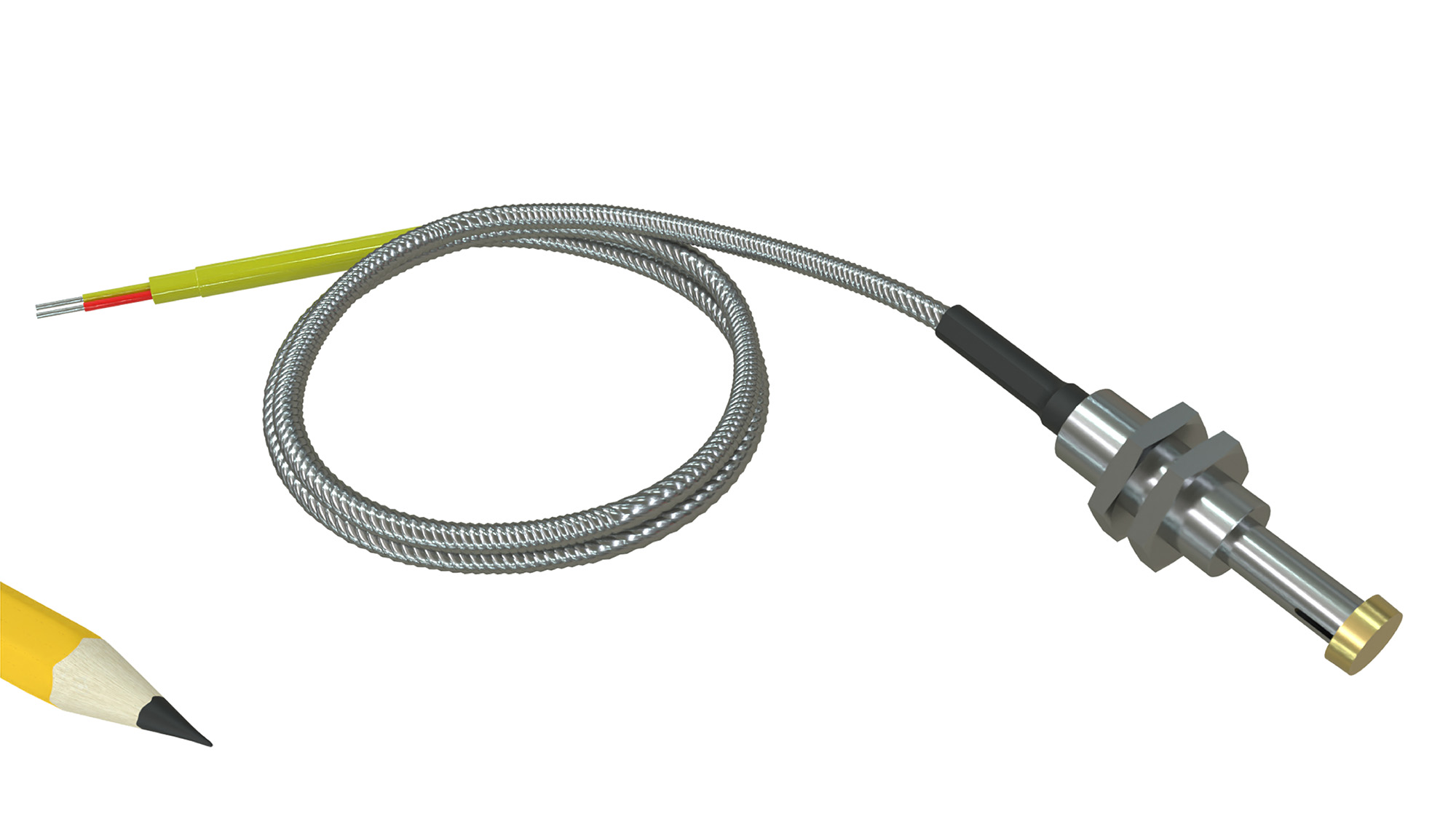
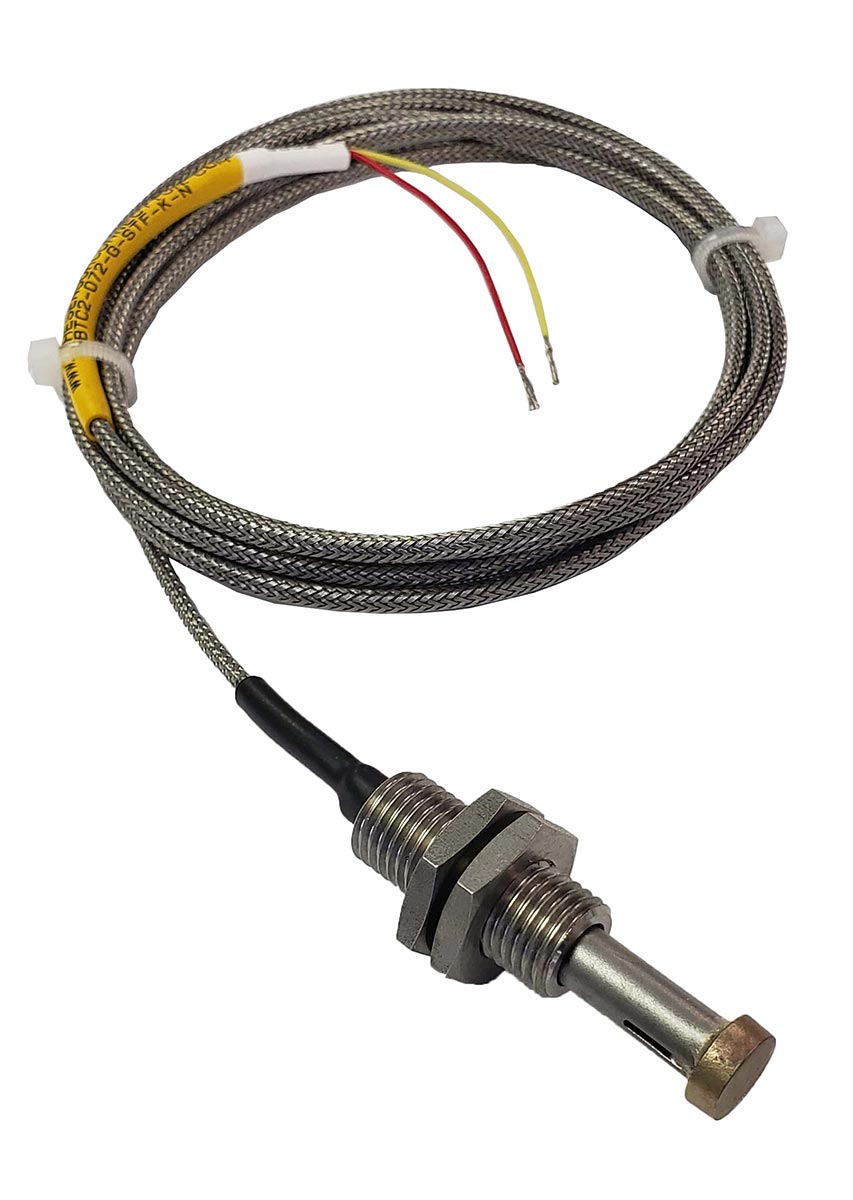
• Type K Thermocouple
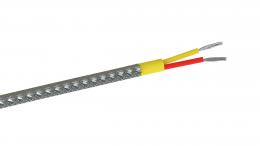
• 24 AWG FEP insulated conductors, Stainless Steel Overbraid, stranded
• Spring-Loaded Tip contacts brake rotor surface
MADE IN THE USA
The Rubbing Brake Disc Rotor Thermocouple Sensor is designed for use in R&D and Motorsports testing of brake disc temperature. The sensor is made in the USA with superior materials, designed to withstand even the most rigorous testing conditions.
Important: Sensor tip will wear over time—ideal for short-term testing, not permanent installation
It is important to note that the Rubbing Brake Disc & Rotor Thermocouple Sensor is intended for R&D purposes, not permanent use. Since the tip rides against the turning brake rotor it is a wearable item due to the friction. Every application is different but eventually the tip wears down and the sensor should be replaced.
The Rubbing Brake Disc Rotor Thermocouple Sensor is designed for Research and Development, test labs, manufacturing engineering and production environments. They can be customized for OEM applications as well.
IMPORTANT NOTE: Please confirm with your instrument manufacturer that the instrument is compatible with a Type K thermocouple sensor.
Options:
TECHNICAL SPECIFICATIONS
Thermocouple type: | Type K |
Sensing Junction: | Ungrounded |
Accuracy: | +/-0.4% of reading or about +/- 1.1°C (Special Limits of Error) |
Barrel: | Thread 7/16”-20 |
Response Time Constant: | ~15 Seconds |
Lead Wire: | 24 AWG FEP insulated conductors, Stainless Steel Overbraid, stranded |
DOCUMENTS & DOWNLOADS
VIDEOS
No Result Found
RELATED PRODUCTS
About - Rubbing Brake Disc Rotor Thermocouple Temperature Sensor
Rubbing Contact Measurement of a Rotating Rotor
Measuring the temperature of a rotating brake disc presents a fundamental challenge: the rotor is moving, while most temperature sensors must remain stationary.
The rubbing thermocouple solves this by using a spring-loaded thermocouple tip that maintains light, consistent contact with the rotor face as it rotates.
As the rotor spins, the tip remains in contact with the surface, allowing continuous measurement of rotor surface temperature without the need for slip rings, telemetry systems, or rotating electrical connections.
This provides a direct measurement of rotor surface temperature at the contact point in real time during braking events.
Why Measure Rotor Surface Temperature
Rotor surface temperature is where braking energy is converted into heat.
Measuring at this location allows engineers and tuners to evaluate:
- Brake pad operating temperature range
- Onset of fade or glazing
- Thermal balance between front and rear brakes
- Heat input during braking events
This is more representative than measuring at the caliper, hub, or duct air temperature.
Rubbing Contact vs Non-Contact Methods
Unlike infrared sensors, which depend on emissivity and can be affected by debris, surface condition, or viewing angle, a rubbing thermocouple:
- Measures temperature through direct physical contact
- Is not affected by emissivity variation
- Provides consistent readings under changing surface conditions
Construction and Design
The sensor includes:
- Type K thermocouple, ungrounded junction
- Spring-loaded contact tip for consistent rotor contact
- Brass contact tip for controlled wear characteristics
- 304 stainless steel cartridge body
- 24 AWG Type K thermocouple wire with stainless overbraid and FEP insulation
The spring force ensures reliable contact while minimizing wear on both the sensor tip and rotor surface.
Mounting and Installation
The sensor is designed for threaded mounting using:
- 7/16-20 UNF mounting hardware
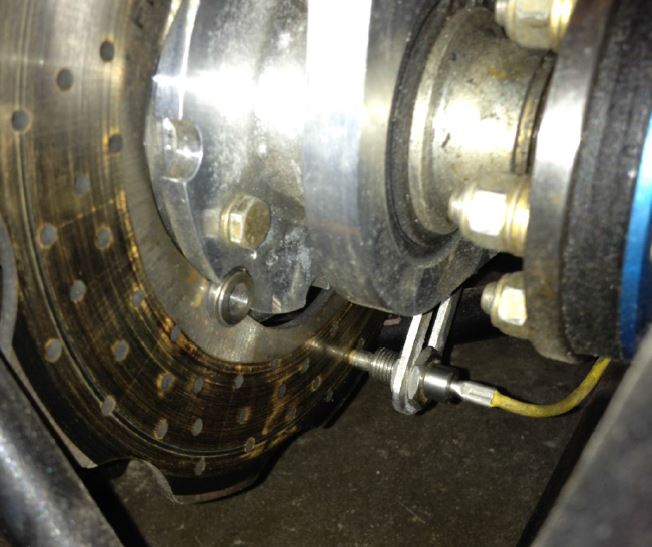
Typical mounting locations include:
- Caliper brackets
- Brake backing plates
- Custom fabricated brackets
The sensor is positioned so that the tip contacts the swept area of the rotor, where the brake pad engages.
Proper setup requires:
- Light, consistent contact pressure
- Secure mounting to prevent vibration-induced movement
- Correct alignment with the rotor surface
Cable and Wiring
The sensor uses:
- Stainless overbraid for abrasion resistance
- FEP insulation for chemical and temperature resistance
Type K polarity must be maintained:
- Yellow = Positive (+)
- Red = Negative (–)
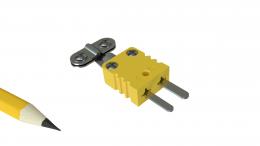
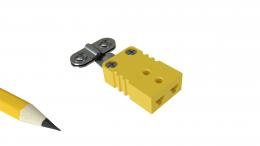
The sensor connects to any Type K-compatible pyrometer, data acquisition system, or ECU input.
Wear and Maintenance
Because the sensor operates through physical contact:
- The contact tip is a wear component
- Periodic inspection is recommended
- Proper setup minimizes wear rate
Maintaining correct spring pressure and alignment is critical for long service life.
Applications
- Brake system development
- Motorsports testing and tuning
- Pad compound evaluation
- Thermal performance analysis
Summary
The Rubbing Brake Disc Rotor Thermocouple provides a direct, real-time measurement of rotor surface temperature during operation.
- Spring-loaded contact design for consistent measurement
- Direct surface contact avoids emissivity errors
- Rugged construction for motorsports environments