
OVERVIEW
Add some sound to your alarm!
• Voltage Range: 3-20 VDC
• Current Consumption: 10 mA @ 12 VDC
• Sound Pressure Level: 75 dB min. @ 30 cm/12 VDC
• Resonant Frequency: 4500 Hz +/- 500 Hz
• Operating Temperature: -4F to +140F (-20C to +60C)
• Mounting Centers: 1-9/64" (29 mm)
• Size: 7/8" diameter x 5/16" tall (22 mm diameter x 8 mm tall)
• Weight: 4 grams
For use with our PMD and PMD-W Series "SuperLite" digital pyrometers
IMPORTANT DISCLAIMER IF YOU ARE CONSIDERING USING THIS INSTRUMENT IN AN AIRCRAFT:
This instrument is not certified by the FAA. Fitting of this instrument to certified aircraft is subject to the rules and conditions pertaining to such in your country. Please check with your local aviation authorities if in doubt. This instrument is intended for ultralight, microlight, homebuilt and experimental aircraft. Operation of this instrument is the sole responsibility of the pilot in command (PIC) of the aircraft. This person must be proficient and carry a valid and relevant pilot’s license. This person has to make themselves familiar with the operation of this instrument and the effect of any possible failure or malfunction. Under no circumstances does The Sensor Connection or manufacturer condone usage of this instrument for IFR flights.
TECHNICAL SPECIFICATIONS
Brand Name: | The Sensor Connection |
Made in: | China |
Voltage Range: | 3-28 VDC |
Current Consumption: | 8 mA @ 12 VDC |
Sound Pressure Level: | 85 dB (minimum) @ 12 VDC |
Resonant Frequency: | 4500 Hz +/- 500 Hz |
Operating Temperature: | -4F to +158F (-20C to +70C) |
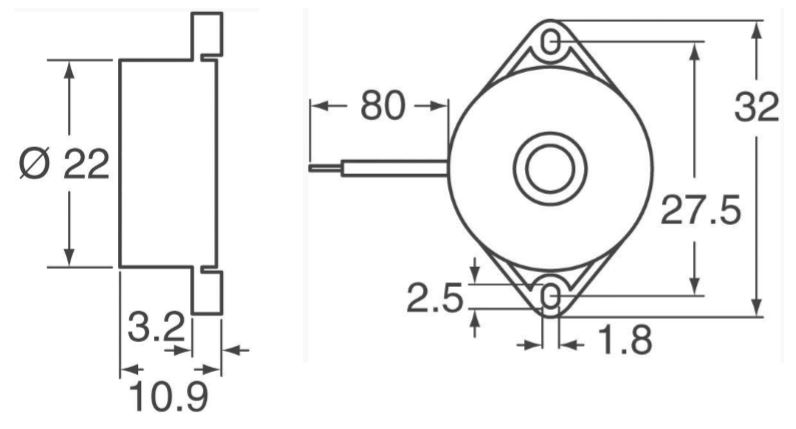
Mounting Centers: | 1-3/32" (27.5 mm) |
Size: | 0.886" diameter x 0.430" tall (22 mm diameter x 11 mm tall) |
Weight: | 4 grams |
DOCUMENTS & DOWNLOADS
VIDEOS
RELATED PRODUCTS
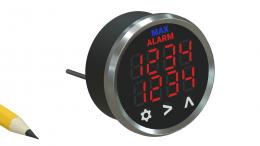
About - Audible Piezo Buzzer Alarm
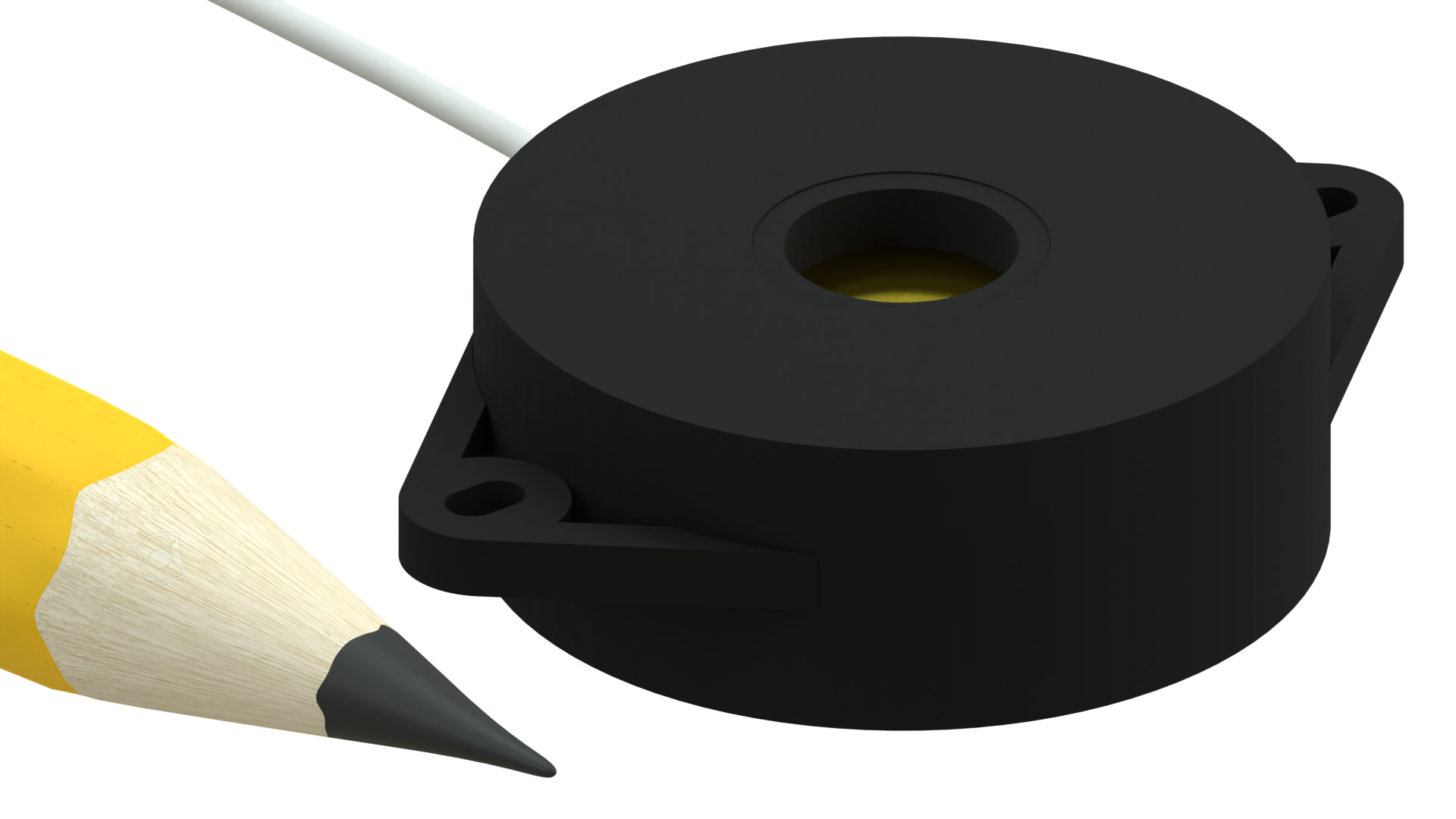
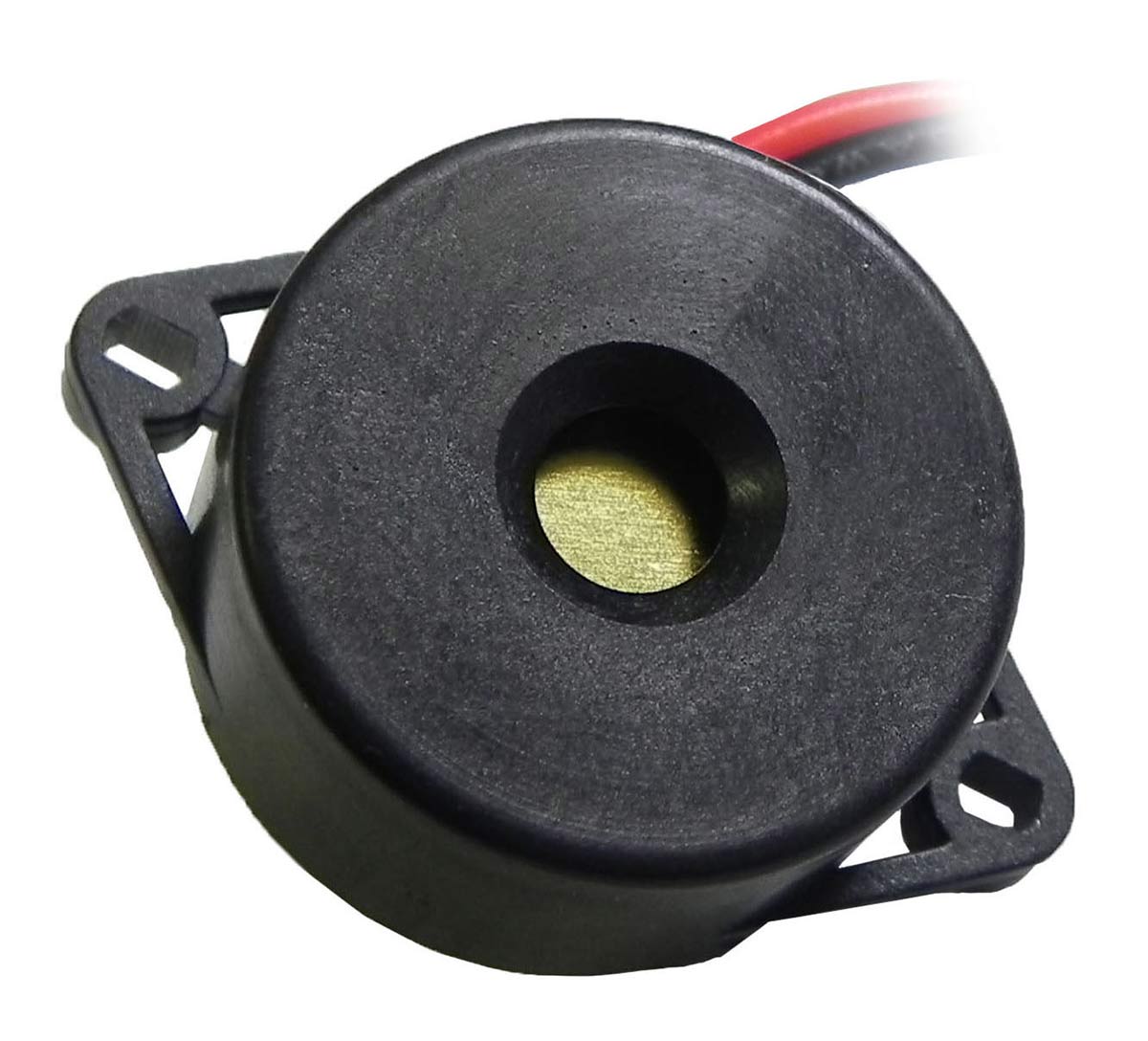
The BUZZER-85DB-0 is a compact piezo buzzer designed to connect to the alarm output of TSC pyrometer gauges, providing an audible alert when a programmed temperature threshold is exceeded.
At 4 grams and 22 mm diameter, it can be surface-mounted or recessed into a panel, dash, or bulkhead. It produces 85 dB at 12 VDC—sufficient to cut through engine and wind noise in most enclosed and many open-cockpit environments.
The buzzer operates from 3 to 28 VDC, making it compatible with both 12V and 24V electrical systems.
Why an Audible Alarm Matters
A visual alarm requires the operator to be looking at the display when a threshold is crossed. In many applications—racing, marine, or industrial—that moment often occurs when attention is elsewhere.
An audible alarm provides immediate notification without requiring visual attention. The buzzer’s 4500 Hz tone is aligned with the range of maximum human auditory sensitivity, making it effective in noisy environments.
Gauge Alarm Outputs: Relay vs Open-Collector
Different TSC gauges use different alarm output architectures. The wiring method for the buzzer depends on the gauge type.
Relay Contact Output (PMD-W SuperLite, DPG-SD, DPG-XR-2)
Gauges with relay outputs switch a dry contact that can complete a circuit directly.
- Connect one buzzer lead to the relay contact
- Connect the other lead to supply voltage
When the relay closes, the circuit completes and the buzzer sounds.
The buzzer draws ~8 mA at 12 VDC, well within relay contact ratings (1–2A depending on gauge).
Open-Collector NPN Output (MPG-4C, MPG-12C)
These gauges use an NPN transistor that switches to ground (sinks current).
- Connect buzzer positive to supply voltage
- Connect buzzer negative to the alarm output terminal
When the alarm triggers, the transistor pulls the circuit to ground and the buzzer sounds.
Maximum load: 0.25A
The buzzer draws far less than this limit.
Improper wiring may result in no output or improper operation.
Quick Wiring Reference
Gauge | Output Type | Wiring Method | Max Load |
|---|---|---|---|
PMD-W SuperLite | Relay | Direct wiring | 1A |
DPG-SD | Relay | Direct wiring | 2A |
DPG-XR-2 | Relay | Direct wiring | 2A |
MPG-4C | Open-collector | Supply-through wiring | 0.25A |
MPG-12C | Open-collector | Supply-through wiring | 0.25A |
Sound Level in Practice
- 85 dB @ 30 cm (12") at 12 VDC
Sound level decreases with distance:
- ~79 dB at 60 cm
- ~73 dB at 1.2 m
In enclosed vehicles, this is clearly audible above normal cabin noise.
In high-noise environments (open cockpit, racing conditions), positioning closer to the operator improves effectiveness.
Using two buzzers in parallel can increase perceived sound level. Total current remains well within gauge limits.
Frequency and Perception
- Resonant frequency: 4500 Hz ±500 Hz
This frequency lies within the range of highest human hearing sensitivity, improving detectability relative to lower-frequency tones at the same measured sound level.
Mounting
- Mounting centers: 27.5 mm (1-3/32")
- Diameter: 22 mm
- Height: 11 mm
The buzzer can be:
- Surface-mounted using screws
- Recessed into a panel for a flush installation
For best performance, the sound-emitting face should remain unobstructed and directed toward the operator.
Wiring
- Two bare leads
- The buzzer itself is not polarity-sensitive, but wiring must follow the gauge output configuration
Voltage Range
- Operating voltage: 3–28 VDC
Sound output increases with supply voltage. At 24 VDC, the buzzer produces a slightly higher sound pressure level than at 12 VDC.
Technical Specifications
Parameter | Specification |
|---|---|
SKU | BUZZER-85DB-0 |
Voltage Range | 3–28 VDC |
Current Draw | 8 mA @ 12 VDC |
Sound Level | 85 dB @ 30 cm |
Frequency | 4500 Hz ±500 Hz |
Operating Temp | -4°F to +158°F (-20°C to +70°C) |
Mounting Centers | 27.5 mm |
Dimensions | 22 mm dia × 11 mm |
Weight | 4 g |
Origin | China |
Compatible TSC Gauges
- PMD-W SuperLite
- DPG-SD
- DPG-XR-2
- MPG-4C
- MPG-12C
Applications
- Motorsport temperature alarms
- Marine engine monitoring
- Industrial temperature warning systems
- Equipment safety alerts
Summary
The BUZZER-85DB-0 provides a simple and effective audible alert solution for temperature monitoring systems.
- Compact, low-current design
- Wide voltage compatibility
- Compatible with all TSC gauge alarm outputs
- Effective audible warning in most operating environments