

OVERVIEW
• Fast Response
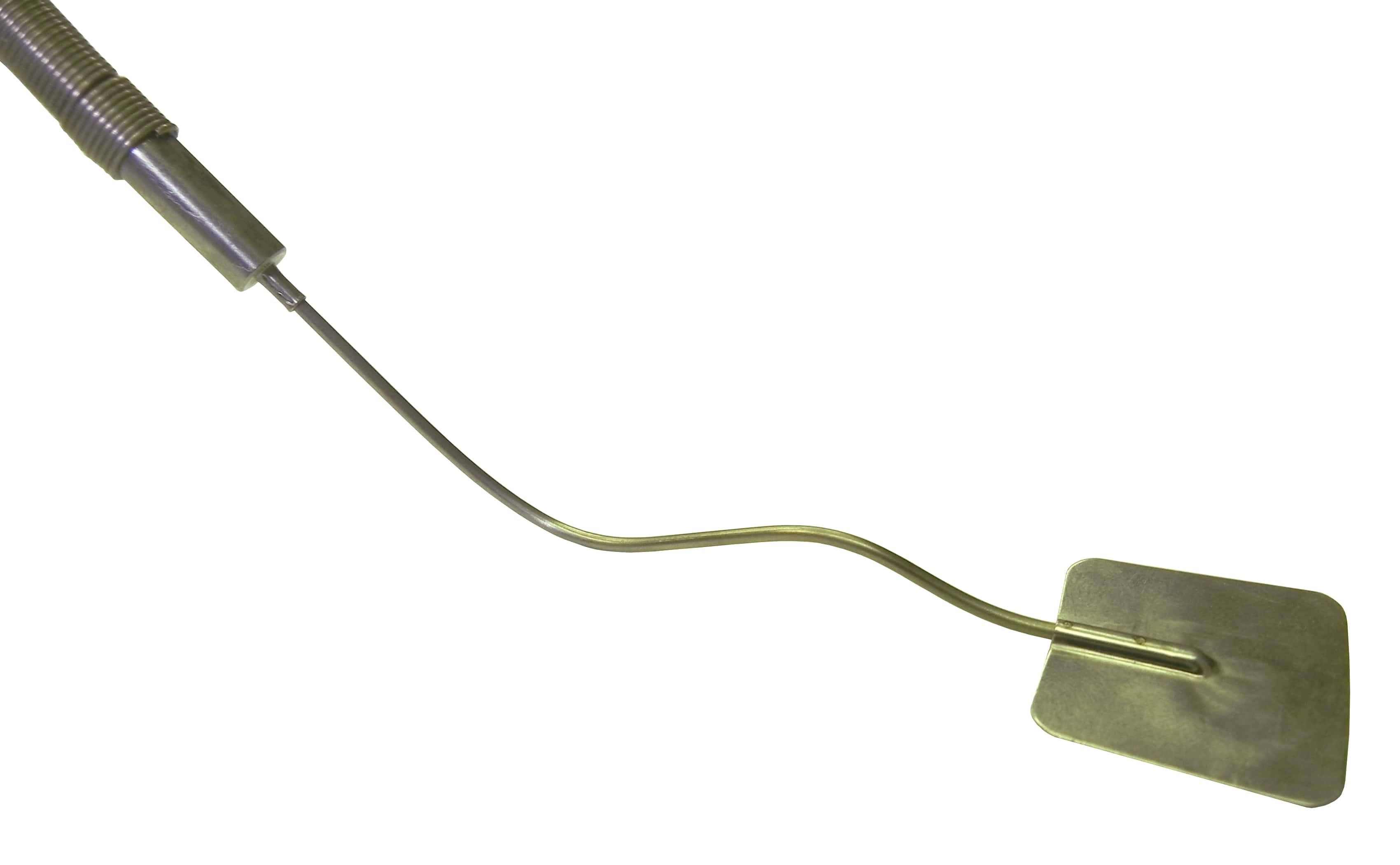
• Flexible Stainless Steel pad, can be attached to flat or curved surface
• Pad can be brazed, spot welded, or clamped to surface
• For measuring surface temperature of exhaust pipe or manifold
MADE IN THE USA
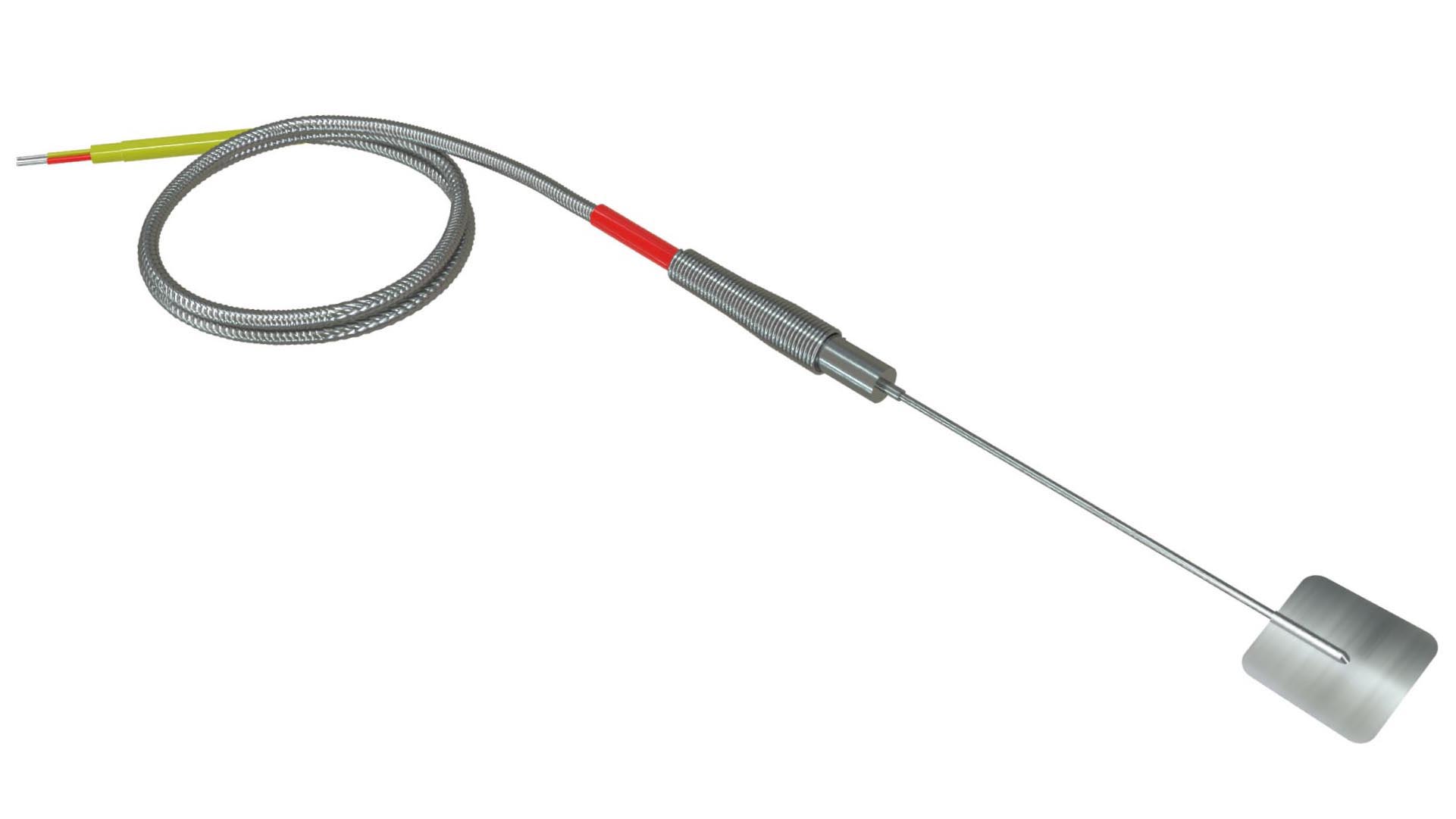
The Exhaust Manifold or Pipe Surface Temperature Probe is designed for use in Motorsports or R&D Testing applications to measure the relative exhaust gas temperature by way of attachment to the surface of the manifold or pipe. They can be customized for OEM applications as well. The probe is made in the USA with superior materials, designed to withstand even the most rigorous operating conditions.
The pad is 1.0" x 1.0" x 0.01" (25mm x 25mm x 0.25mm) and made of 304 stainless steel. Pad can be brazed, spot welded, or clamped to surface and has a flexible cable stem.
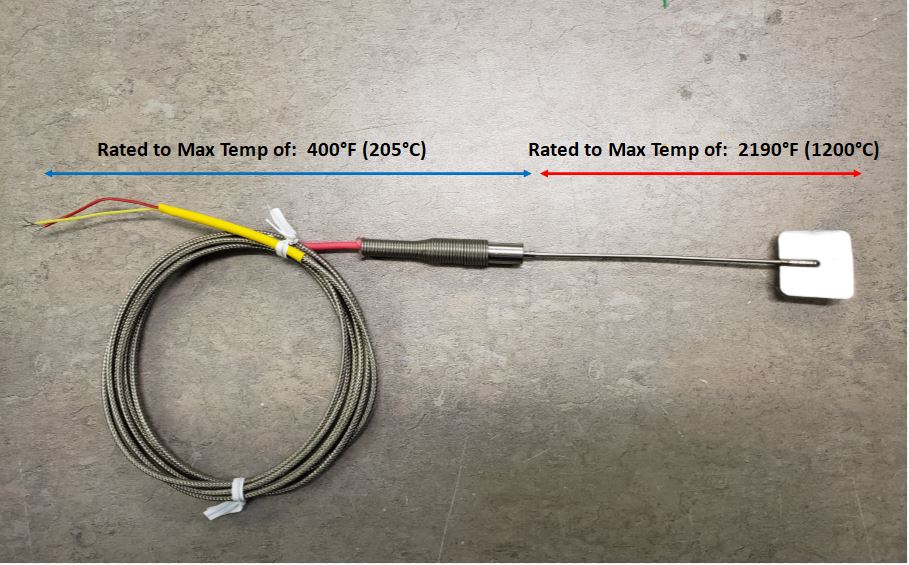
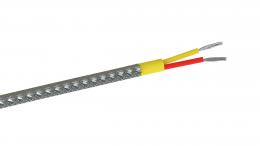
The probe cable is over-braided in stainless steel for heavy-duty abrasion resistance. The signal wires are FEP insulated. Designed to deliver high performance, high temperature measurements, reliably and consistently.
IMPORTANT NOTE: Please confirm with your instrument manufacturer that the instrument is compatible with a Type K thermocouple sensor.
Options:
TECHNICAL SPECIFICATIONS
Thermocouple type: | Type K |
Sensing Junction: | Ungrounded |
Accuracy: | +/-0.4% of reading or about +/- 1.1°C (Special Limits of Error) |
Probe Diameter: | 1/16 inch (0.062 inch) (1.6 mm) |
Response Time: | 300 milliseconds |
Outer Sheath Material: | Inconel, MgO insulated, 0.062” OD, rated to 2192°F (1200°C) |
Pad Material: | 304 Stainless Steel, rated to 2192°F (1200°C) |
Pad Dimensions: | W = 1.0” x H = 1.0” (25 mm x 25 mm), Thickness 0.010” (0.25 mm) |
Cable: | Stainless steel overbraiding over FEP Teflon™ insulated, stranded wires |
DOCUMENTS & DOWNLOADS
VIDEOS
RELATED PRODUCTS
About - Exhaust Manifold or Pipe Surface Thermocouple Temperature Sensor
Surface Measurement vs. In-Stream Probing: When the Weld Pad Makes Sense
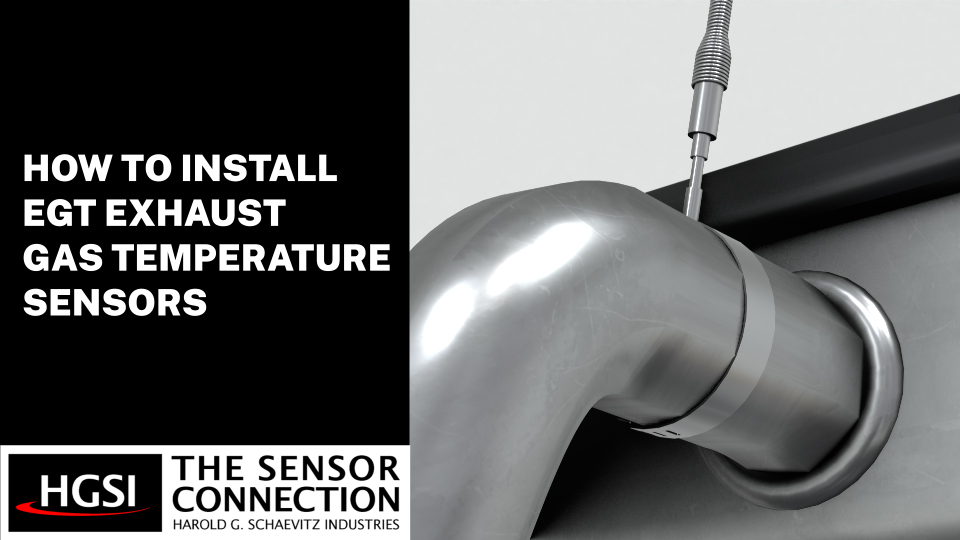
Installing a probe through the pipe wall requires tapping a port, welding a bung, and exposing the probe tip directly to the exhaust stream — the preferred approach when precise combustion gas temperature is required at a specific cylinder. However, not every measurement application requires in-stream accuracy. Exhaust manifold surface temperature provides a useful indication of thermal load on the manifold, heat rejection into the engine bay, and relative cylinder balance when individual in-stream probes are not practical.
The WPTC-ST Series uses a 1.0-inch × 1.0-inch pad formed from 0.010-inch (0.25 mm) 304 stainless steel.
The thin pad maximizes thermal coupling to the pipe or manifold surface while keeping the profile low — important in applications where clearance to adjacent components or heat shielding is limited. The pad can be brazed, spot welded, or mechanically clamped depending on the installation requirements and base material.
Probe Construction: Inconel Sheath, Ungrounded Junction, FEP Cable
The sensing element uses an Inconel-sheathed, MgO-insulated thermocouple with an ungrounded junction, available in Type J, K, or T configurations.
Inconel is well suited for sustained high-temperature exhaust environments due to its resistance to oxidation and chemical attack. The ungrounded junction keeps the thermocouple electrically isolated from the sheath and mounting surface, which helps prevent ground loop issues when the pad is attached to a grounded component.
The lead wire consists of 24 AWG stranded conductors with FEP insulation and stainless steel overbraid.
FEP insulation is rated to 400°F (204°C) and resists exposure to oil, fuel, and other contaminants commonly found in engine compartments, while the overbraid provides abrasion resistance.
Temperature Range and Response
- Temperature range: -148°F to 2192°F (-100°C to 1200°C)
- Accuracy: ±0.4% of reading or ±1.1°C (Special Limits of Error)
- Response time: approximately 300 ms (time constant)
Response time is defined as the time required to reach 63.2% of a step temperature change. This provides a relatively fast response for a surface-mounted sensor, while reflecting the thermal characteristics of the underlying component.
Attachment Methods and Cable Length Options
Brazing provides the most thermally conductive attachment between the pad and the manifold surface, but requires compatible materials and proper preparation. Spot welding is suitable for steel manifolds and provides a clean, permanent attachment. Mechanical clamping — using a heat shield clamp or bracket — is preferred when repositioning is required or when working with materials that are not easily welded.
The sensor is designed for research and development applications where measurement location flexibility is important.
Cable lengths of 6, 12, and 25 feet allow routing away from high-temperature zones to a pyrometer, data logger, or DAQ system without requiring additional extension cable in most installations. Where longer runs are required, Type J, K, or T thermocouple extension wire should be used to maintain measurement accuracy.