
OVERVIEW
• Type K Thermocouple
• #8-32 male threaded fitting
• Fitting Housing Material: 316 stainless steel
• -50°F to 400°F operating range (-45°C to 204°C)
MADE IN THE USA
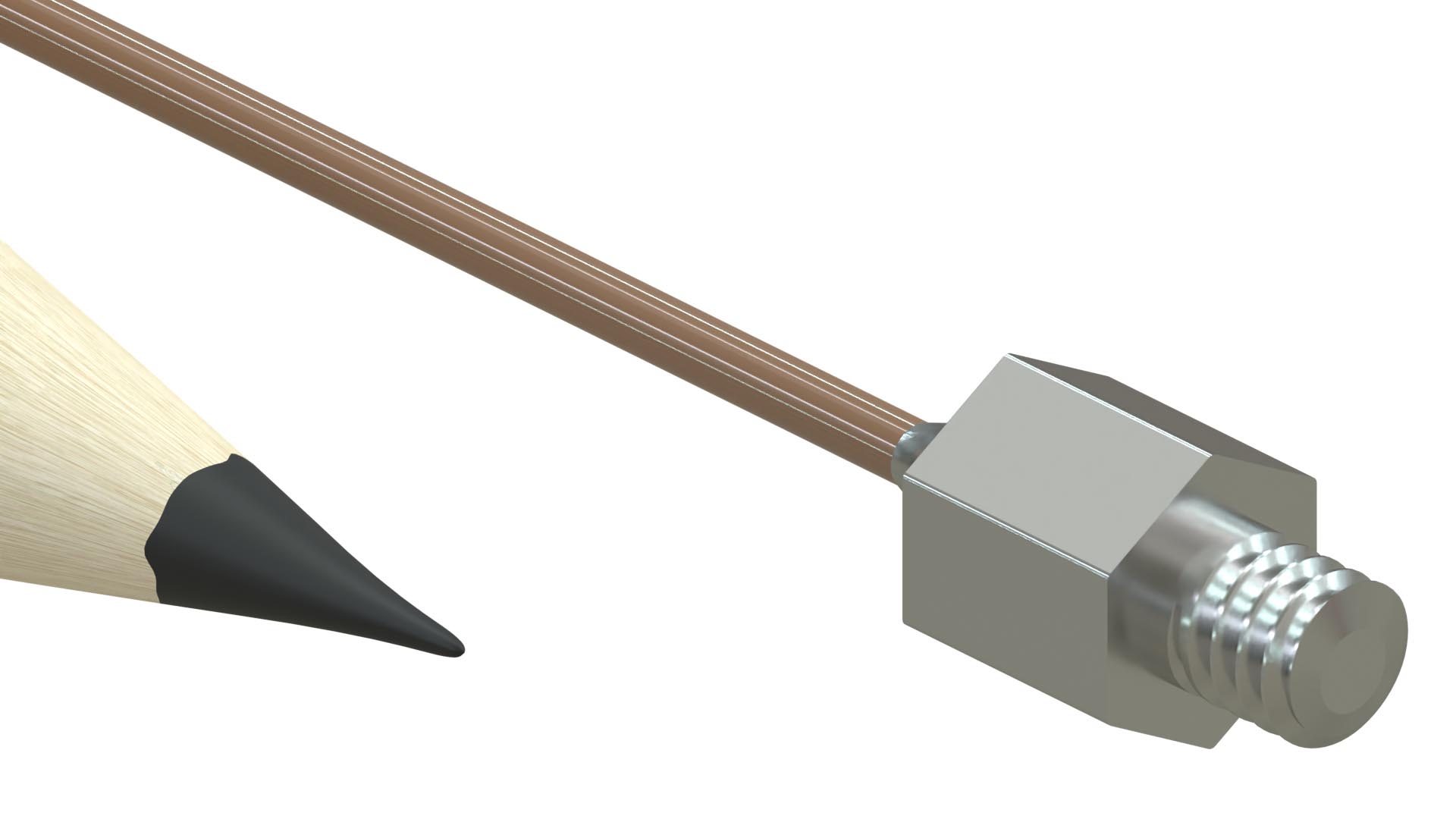
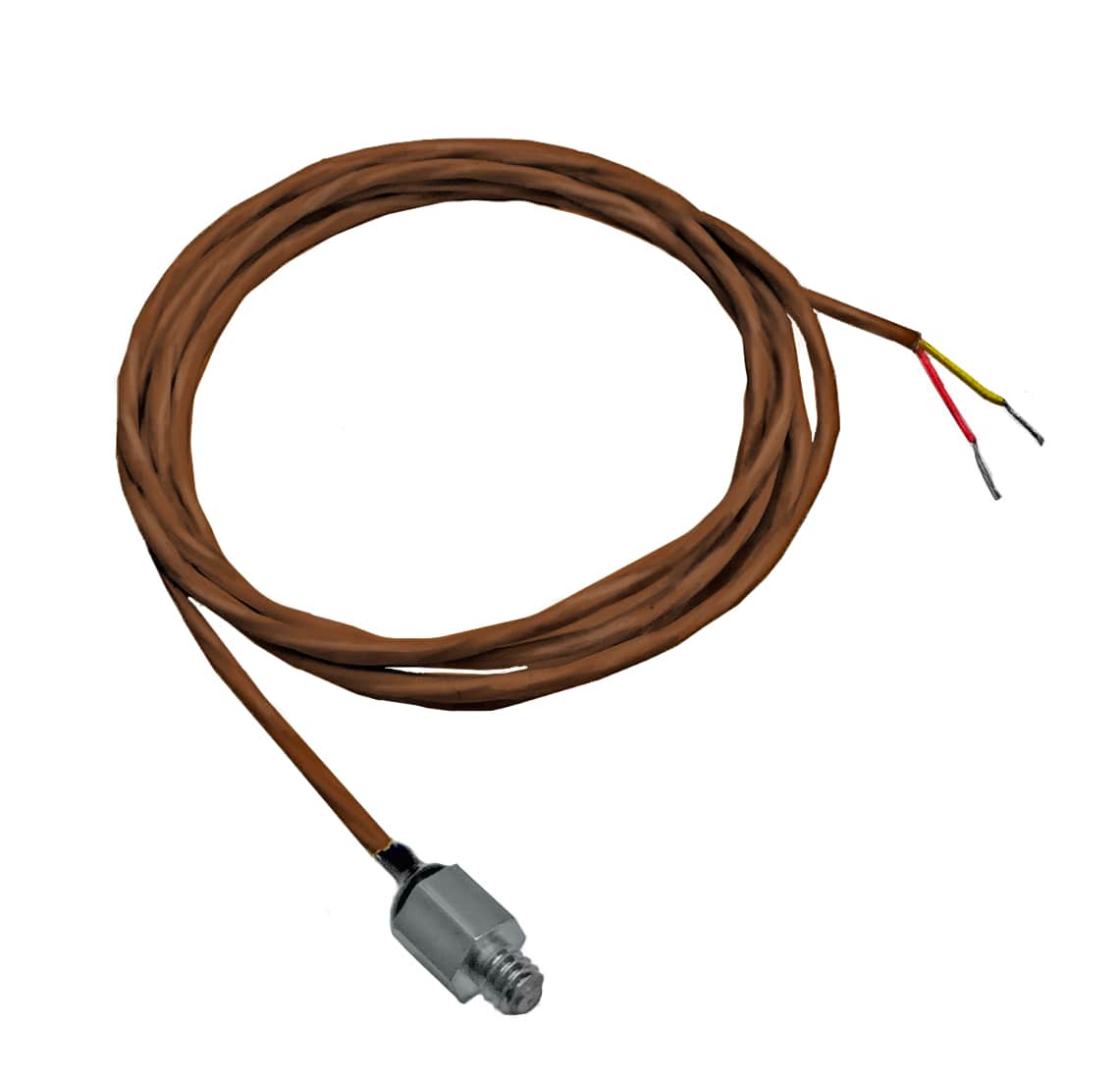
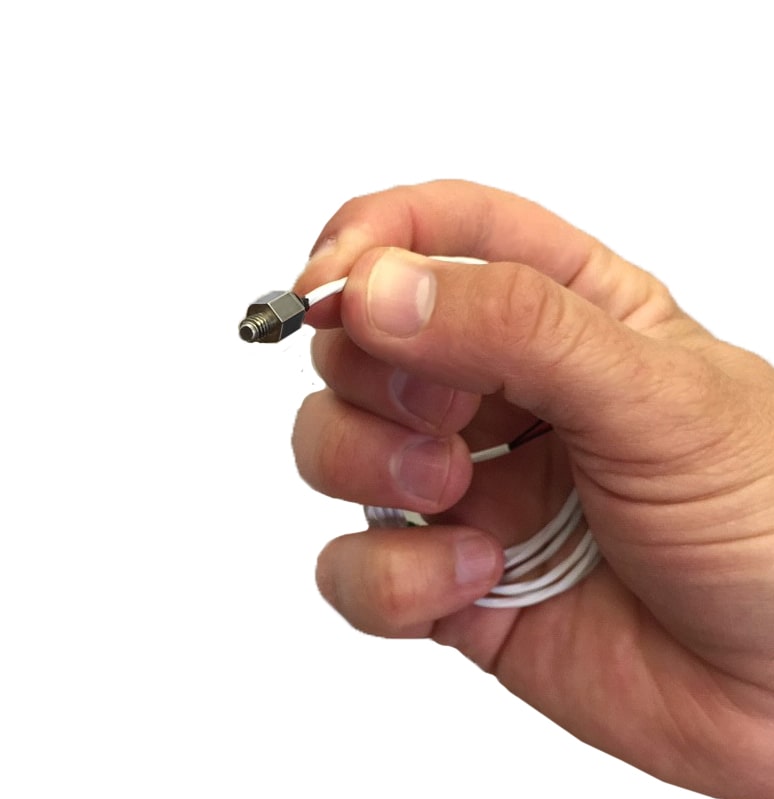
The SMTS-TC Surface Mount Threaded Stud CHT Sensor is designed for use in Motorsports R&D and Testing applications. The stainless steel fitting may be threaded in to a #8-32 tapped surface.
The SMTS-TC Surface Mount Threaded Stud CHT Sensor is designed to deliver high performance temperature measurements, reliably and consistently.
IMPORTANT NOTE: Please confirm with your instrument manufacturer that the instrument is compatible with a Type K thermocouple sensor.
Options:
TECHNICAL SPECIFICATIONS
Thermocouple type: | Type K |
Accuracy: | +/-0.4% of reading or about +/- 1.1°C (Special Limits of Error) |
Operating Temperature Range: | -50 to 400°F (-45 to 204°C) |
Response Time: | ~6 seconds |
Available Inner Diameter Sizes: | 0.48 inches (12 mm) |
Cable: | 24 AWG FEP insulated conductors, stranded, 3 foot (0.9 meter) lead wire |
IP Rating: | IEC IP64 |
Fitting Housing Material: | 316 Stainless Steel |
DOCUMENTS & DOWNLOADS
VIDEOS
No Result Found
RELATED PRODUCTS
About - SMTS-TC Miniature Surface Mount Threaded Stud CHT Sensor
Threaded Stud Mounting for Surface Temperature Measurement
The SMTS-TC is designed for applications where a cylinder head temperature sensor needs to mount to a tapped surface rather than under a spark plug. A threaded stud fitting — commonly specified in #8-32, but also available in other thread sizes — allows the sensor to be screwed directly into a tapped hole in the engine case, cylinder head, or any metallic surface where a threaded boss is accessible.
This approach is common in R&D and engine testing environments where the measurement point is intentionally designed into the test article, providing a clean and secure attachment that maintains position through vibration and thermal cycling without relying on external clamping forces.
The sensor is available with Type E, J, K, or T thermocouple calibrations, along with grounded or ungrounded junction options depending on application requirements.
Temperature Range and Response Characteristics
With a rated temperature range of -50°F to 400°F (-45°C to 204°C), the SMTS-TC is suited for cylinder heads, intake manifolds, oil systems, transmission cases, and other powertrain surfaces encountered in motorsports and dynamometer testing.
The response time of approximately 6 seconds (time constant) reflects the nature of a surface-mounted sensor, where the thermocouple junction reaches thermal equilibrium through conductive contact with the mounting surface. Response time is defined as the time required to reach 63.2% of a step temperature change.
For applications requiring faster response to rapidly changing temperatures, an in-stream probe is more appropriate. For steady-state surface monitoring, this response speed is typically sufficient.
Environmental Rating and Cable Construction
The SMTS-TC carries an IP64 rating, meaning it is protected against dust ingress and resistant to water splashed from any direction.
The sensor uses 24 AWG stranded conductors with FEP insulation, which provides resistance to fuel, oil, and other automotive fluids while maintaining flexibility across a wide temperature range.
This construction makes it suitable for under hood and test cell environments where exposure to heat, vibration, and contaminants is expected.
Accuracy and Integration
The sensor meets Special Limits of Error accuracy, defined as the greater of ±0.4% of reading or ±1.1°C.
It is available with multiple connector options, including mini and standard thermocouple plugs and jacks, allowing direct connection to compatible instrumentation without additional adapters.
As with all thermocouples, the receiving instrument must be configured for the correct thermocouple type to ensure accurate measurement.